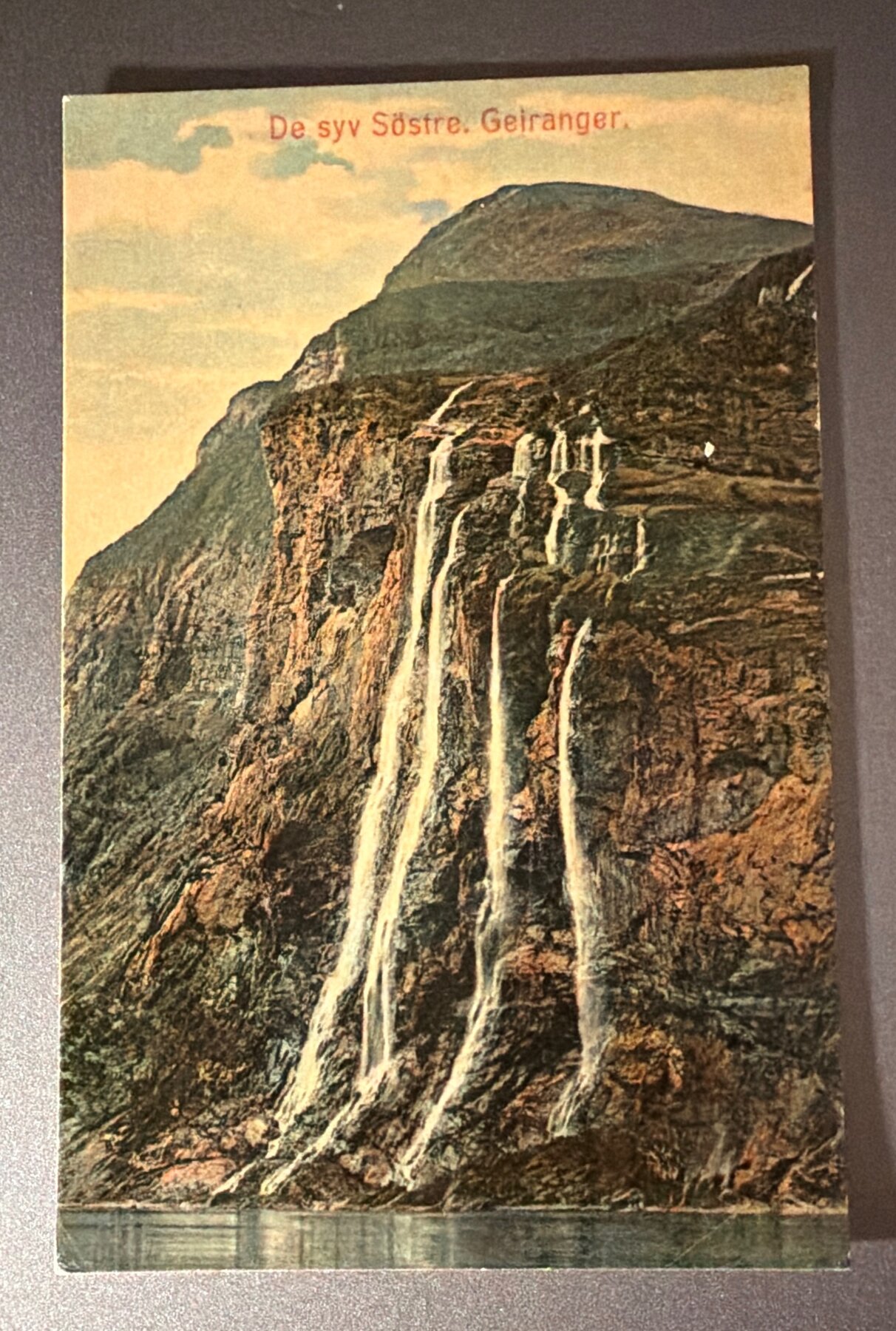
Postcard 1905 Norway Seven Sisters Waterfall Geiranger Color Litho
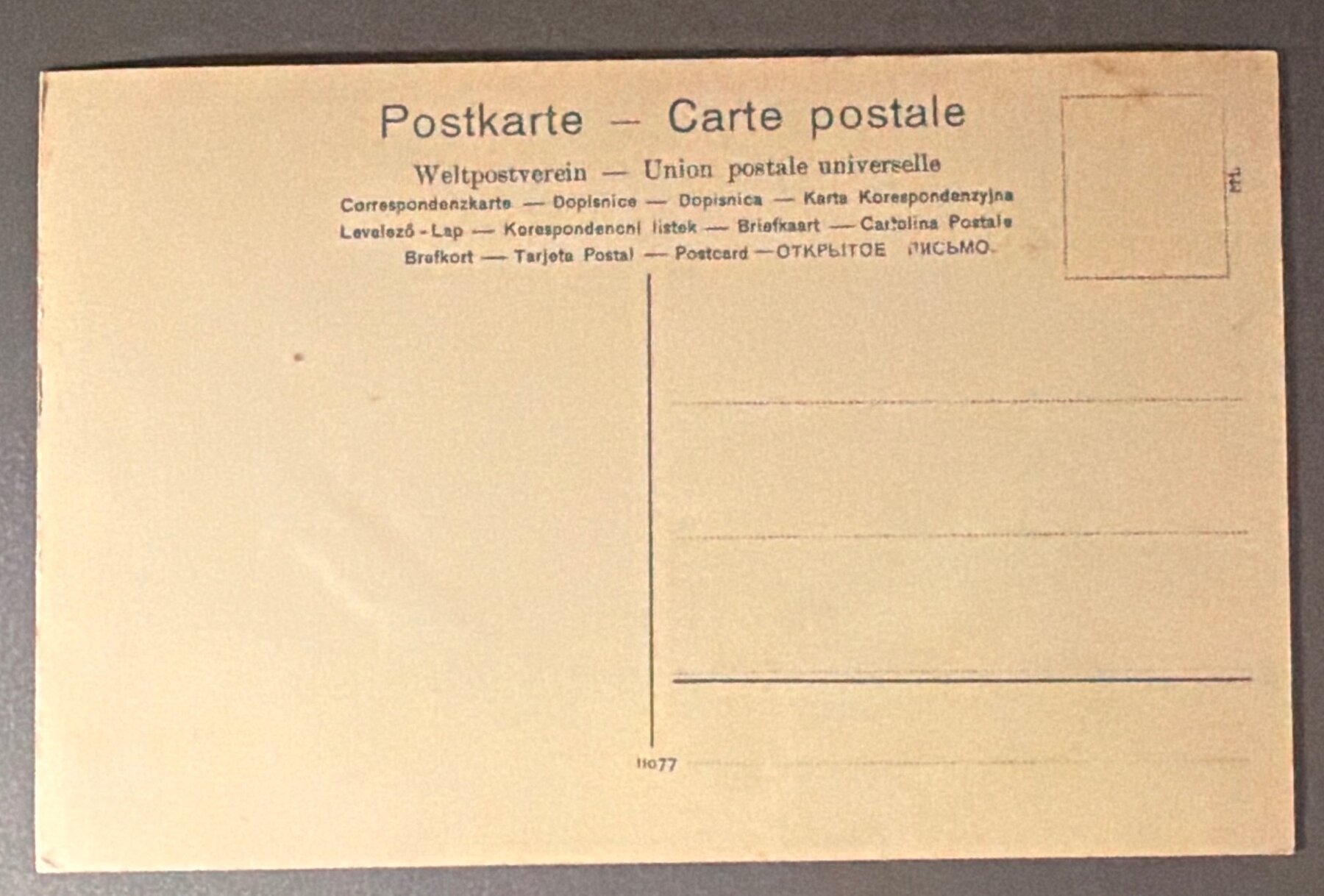
Seven silver threads of glacial meltwater plunge hundreds of meters down sheer orange-grey cliff faces into the dark mirror of the Geirangerfjord in this richly hand-tinted lithographic card — a view of De syv Søstre, the Seven Sisters waterfall, one of Norway's most celebrated natural spectacles and a landmark that made the Geiranger UNESCO World Heritage fjord famous among the Grand Tour travelers of the Belle Époque. The coloring captures the warm amber of iron-rich rock against the cool white of the falls and the hazy mountain silhouette above, a palette typical of the German-produced chromolithography that dominated the Scandinavian postcard market around 1900–1910. Geiranger became a major steamship destination in the 1890s, and tourists — including Kaiser Wilhelm II, who visited repeatedly — would collect cards like this as proof of their journey into what contemporary guidebooks called "the most scenically perfect fjord on earth." The undivided-back style of the reverse (card number 11077, multilingual Weltpostverein text) places this card in the very early divided-back transition era, c. 1905–1910.